Tuesday, July 3

Wrestling with God

There are many gems in the Bible, some more well-known than others. One such gem is the wrestling match between God and man. The occurrence in question can be found in Genesis 32. Written by Moses c.1445-1405 BC, the book of Genesis details the six-day creation of the universe,  the subsequent fall of man and corruption of the universe, the first murder, the first people and their technological achievements, the worldwide flood in the time of Noah, the dispersion of nations from the plain in Shinar at Babel, as well as the lives of Abraham, Isaac, Jacob, and Joseph. There are various other incidents and details found within the record, but a general background elucidates the time and place of the event and allows for further understanding. By the time we come to Genesis 32, much has already transpired in the world. Here we find Jacob the son of Isaac (who was the son of Abraham), on his way to meet his brother Esau, whom he had not seen face to face in over two decades. During the journey, Jacob has psychologically had to prepare himself, but is currently in between two situations, having left one with his uncle Laban and proceeded to enter into one with his brother Esau.

Up to this point, Jacob had believed in God but had not actually become personal with Him. Four chapters prior to the "wrestling match" in Genesis 32, Jacob stops at a certain place to rest for the evening. During the night he "had a dream in which he saw a stairway [or ladder] resting on the earth, with its top reaching to heaven, and the angels of God were ascending and descending on it. There above it [or There beside him] stood the LORD" (28:12-13). God proceeded to make a promise to Jacob, who then woke up and called the place "Bethel," which means "house of God." Jacob continued to serve God during the twenty years he worked for his uncle Laban, but in all that time never became close to God. In other words, Jacob did not allow his vulnerability to come into play, and he did not have a personal relationship with God. This is also clearly seen at the beginning of chapter 32. "Then Jacob prayed, 'O God of my father Abraham, God of my father Isaac, LORD..." (32:9). It is worth nothing that Jacob does not call Him "my God" or something similar, but calls Him "God of my father." He does not identify God on a relational level but on more of a covenantal level, much like the way many of the Israelites in Moses' day did.

Verses 22-32 are the verses in question. According to Genesis 32:22-32, on the eve of meeting his brother after two decades, "That night Jacob got up and took his two wives, his two female servants and his eleven sons and crossed the ford of the Jabbok. After he had sent them across the stream, he sent over all his possessions. So Jacob was left alone, and a man wrestled with him until daybreak. When the man saw that he could not overpower him, he touched the socket of Jacob's hip so that his hip was wrenched as he wrestled with the man. Then the man said, 'Let me go, for it is daybreak.' But Jacob replied, 'I will not let you go unless you bless me.' The man asked him, 'What is your name?' 'Jacob,' he answered. Then the man said, 'Your name will no longer be Jacob, but Israel, because you have struggled with God and with human beings and have overcome.' Jacob said, 'Please tell me your name.' But he replied, 'Why do you ask my name?' Then he blessed him there. So Jacob called the place Peniel, saying, 'It is because I saw God face to face, and yet my life was spared.' The sun rose above him as he passed Peniel, and he was limping because of his hip. Therefore to this day the Israelites do not eat the tendon attached to the socket of the hip, because the socket of Jacob's hip was touched near the tendon."

From Rembrandt (1659; Public Domain)
If a casual reader was reading the passage, that individual is liable to miss a lot of information. Within the above passage, there are several interesting statements made and actions taken by each of the figures involved. To better appreciate the passage, the message and what we can learn, it is therefore necessary to unpack the information, determine what questions we can ask and how we may answer said questions. First of all, verse 22 mentions the geographic location - "the ford of the Jabbok." The Hebrew comes from the word baqoq, which means "to flow" or "pour out." It is generally identified as the Zarqa River (from the Arabic word meaning "blue river"), located in Jordan. In recent years a concern has risen due to the contamination of the tributary, causing problems with the flora, fauna as well as those who live in the area. Our passage does not reveal any other historical details, aside from the fact that his family "crossed the ford of the Jabbok," and that after they had crossed "the stream," he sent his belongings too. In fact, "In Hebrew, the word Jabbok is Yabok, and the word wrestled is Yaaveik. The Hebrew word for wrestling is found only here and the next verse, and nowhere else in the Hebrew Bible. It comes from the root avak that means dust. So the basic meaning of this word is to get dusty while wrestling. The name Jabbok was evidently given to the river at a later date to remember Jacob’s amazing experience that night." 

With this in mind, it is relevant to ask several questions. Evidently, the text says that Jacob literally wrestled with God. But if it was God, how could Jacob see Him, if He later told Moses that "no one may see me and live" (Exodus 33:20)? If he was God, why could he not overpower Jacob? Why did God ask Jacob's name if He already knew? Where does the idea that Jews do not eat the tendon come from? Why did the struggle last until daybreak, if God could simple defeat Jacob with a word? Why did God wrestle with Jacob in the first place? These and other questions arise among readers, and are in fact common questions, or a variation of frequently asked questions. It follows that questions deserve answers, enabling us to then seek the answers. To begin with, it is pertinent to describe the nature of this appearance. It is what theologians call a theophany, or a visible manifestation of God to mankind. The word itself comes from the Medieval Latin theophania which is derived from the Late Greek theophaneia. With this background, we may begin to answer some of the questions posed.

First, "if it was God, how could Jacob see Him, if He later told Moses that 'no one may see me and live' (Exodus 33:20)?" This question could provide a plethora of answers, but it is necessary for our purposes to examine just one. We see elsewhere in Scripture that this same idea of not actually seeing God is present. According to John 1:18, "No one has seen God at any time; the only begotten Son who is in the bosom of the Father, He has explained Him." A few chapters later, in John 5:37, Jesus says, "And the Father who sent Me, He has testified of Me. You have neither heard His voice at any time nor seen His form." However, this raises what skeptics claim is a contradiction. Rather, it is a theological misunderstanding on their part. The Jewish Rabbis actually taught that the angel was the guardian angel of Esau. However, the Hebrew Bible is replete with references to physical appearances of God, but if God has not been seen "at any time," how do we explain these appearances? Some have simply noted that it was God, but in a lessened form, or rather that God appeared physically but withheld some of His glory and did not show His true form. In a sense this rings true, but the answer is not complete.

In fact, the fourth gospel itself actually answers this question. More often than not, when referring to God, John meant the Father. This is not true in every instance as Jesus is also called God throughout the Johannine works (cf. John 20:21, for example), but according to John 6:46, "Not that anyone has seen the Father, except the One who is from God; He has seen the Father." In other words, God has been seen by mankind, but not God the Father. It therefore limits us to the other two persons of the Trinity, God the Spirit and God the Son. The Holy Spirit does indeed appear a great many times throughout the Hebrew Bible, but the physical appearances do not appear to be from the Spirit leaving us with these physical appearances - or theophanies - to be described as physical manifestations of Jesus before His earthly incarnation. Typically, theologians refer to such appearances as a Christophany. Jesus often appeared in the Hebrew Bible as the physical manifestation of God, usually appearing as the "Angel of the Lord." Let the reader understand, we are not claiming that Jesus was an angel. The Bible and the earliest textual evidences and archaeological evidences from church history show that Jesus has been considered God from the outset. Jesus is indeed God and not an angel - but if so, how could He be the "Angel of the Lord?"

For those who are unaware, the Hebrew word for angel is mal'ak, which means "messenger." Part of Jesus' original mission on earth was also as a messenger for the Father, aside from His primary goal to provide us with the means for salvation, that is. Nevertheless, this "Angel of the Lord" could rightly be called the "Messenger of the Lord." In fact, this messenger is actually identified as God more than once in Scripture. Consider Exodus 3, where "the angel of the LORD appeared to [Moses] in flames of fire from within a bush. Moses saw that though the bush was on fire it did not burn up" (v.2). Verse 4 says, "When the LORD saw that he had gone over to look, God called to him from within the bush..." verse 5 notes that it is God speaking, and verse 6 continues, "'I am the God of your father, the God of Abraham, the God of Isaac and the God of Jacob.' At this, Moses hid his face, because he was afraid to look at God." When Moses asked God what name He would tell the Israelites, "God said to Moses, ‘I AM WHO I AM. This is what you are to say to the Israelites: I AM has sent me to you'" (v.14). From this passage, it is clear that the Angel of the Lord, also rendered the messenger of the Lord, is God Himself. This angel – or messenger – appears many times in the Hebrew Bible, and is also called God several times. Having appeared in physical form, being called God, and claiming to be God, “I AM,” shows that the angel of the Lord can be no other than God the Son. Interestingly, Jesus claims to be “I AM” in John 5:58, hence why the Israelites attempt to stone Him. It is also worth noting that in some early manuscripts of Jude 5 we read, “Though you already know all this, I want to remind you that Jesus at one time delivered His people out of Egypt, but later destroyed those who did not believe.” Later manuscripts render “Jesus” as “Lord,” although we can note that Romans 10:9 also says, “Jesus is Lord.”

The appearance of the angel of the Lord to Samson's father and mother in Judges 13 is also worth considering in light of Genesis 32. The being is clearly identified as the angel of the Lord (v.3, 13-17, 20-21), and much as He did during His incarnation over one thousand years later, Jesus ascends to heaven (v.20). When this occurs, Manoah and his wife fall down on their faces and once Manoah realized that it was the angel of the Lord he noted, "We are doomed to die... We have seen God!" (Judges 13:22; cf. Exodus 33:20). Clearly, Manoah and his wife understood the being to be God, and God could be seen. This occurs on several other occasions as well. In sum, this angel (or messenger) of the Lord is Jesus, who is Himself God the Son, pre-incarnate. When God physically manifests Himself to humans during the Hebrew Bible, these appearances are those of Christ. There are rare exceptions where a human sees God the Father (Isaiah 6; Daniel 7) but these occur when the individual is in the spirit and not in the physical body. Having this understand, we can then understand how it is that God could physically appear to Jacob in Genesis 32. According to Hosea 12:3-4, "In the womb he grasped his brother's heel; as a man he struggled with God. He struggled with the angel and overcame him; he wept and begged for his favor." God's identity is slowly revealed to Jacob during the confrontation at Jabbok, and is fairly evident from the text.

We then arrive at our next question, "If he was God, why could he not overpower Jacob?" The question is rather significant, really. It begs the questions, "if God is all-powerful, is He bound by us? Can we render Him powerless? Is man stronger?" Succinctly put, God is indeed all-powerful. When He was wrestling during the night with Jacob, He could have disabled Jacob at any given moment. At any moment, God could have touched Jacob's hip and moved it from its proper place. The Hebrew word used here actually means "dislocated." But if God could have won the battle at any given moment, why did He choose not to? There are a variety of reasons, but one of the more evident is as follows: the fight continued "until Jacob was exhausted. I suspect the angel would gain a little advantage and then allow Jacob to feel that he was gaining. This went on and on all night long. How exhausted they must have been. But it was necessary. Jacob needed to reach the point where he had no more strength. I believe it was at this point that the man touched Jacob's hip. The message was clear... you have striven with all your might. Yet, I can with one touch defeat you. Jacob needed to see the superiority of his opponent with clarity. Jacob knew the right words and could perform the right actions... but his heart still was not completely the Lord's. It's easy to have superficial faith. However, a crisis forces us to grapple with our real feelings and our true faith. God provokes this crisis to bring Jacob to a point of genuine faith."[2]

In other words, God could have easily overpowered Jacob - but He allowed Jacob to hold on to Him. By struggling and resisting God we cannot create order, it only results in chaos. When we stop fighting Him - as Jacob did - and cling to Him, we are given rest in His arms. For the Christian, we may fight God and resist Him as much as possible. It is rather like a small child putting up a tantrum with his parents, but when he has exhausted his energy and strength, he simply clings to his parents. Jacob finally stopped resisting and simply clung to God. Quite simply, God could have overpowered Jacob at any time during their fight. But God allowed Jacob to fight with Him and exhaust his energies before finally realizing that all he really needed to do was cling to God. We may continually jump the fence over God's plans, but as Proverbs 19:21 reveals, "Many are the plans in a human heart, but it is the LORD's purpose that prevails." This is echoed in Proverbs 21:30 as well, "There is no wisdom, no insight, no plan that can succeed against the LORD." Finally, we see this earlier in Proverbs 3:5-6, "Trust in the LORD with all your heart and lean not on your own understanding; in all your ways submit to him, and he will make your paths straight." For Jacob, up until this physical fight with God he had not truly trusted God with all his heart.

As a result of the understanding that Jacob was actually wrestling God the Son, we then ask "Why did God ask Jacob's name if He already knew?" If Jacob was actually wrestling with God as the text appears to indicate, and God is all-knowing, why did He not know Jacob's name? According to Ravi Zacharias, Christian author and apologist, "Think of all that God could have said by way of reprimand. Instead He merely asks for Jacob's name. God's purpose in raising this question contains a lesson for all of us, too profound to ignore. In fact, it dramatically altered Old Testament history. In asking for the blessing from God, Jacob was compelled by God's question to relive the last time he had asked for a blessing, the one he had stolen from his brother. The last time Jacob was asked for his name, the question had come from his earthly father. Jacob had lied on that occasion and said, 'I am Esau,' and stole the blessing. Now he found himself, after many wasted years of running through life looking over his shoulder, before an all-knowing, all-seeing heavenly Father, once more seeking a blessing, Jacob fully understood the reason and the indictment behind God's question and he answered, 'My name is Jacob.' 'You have spoken the truth,' God said, 'and you know very well what your name signifies. You have been a duplicitous man, deceiving everyone everywhere you went. But now that you acknowledge the real you, I can change you, and I will make a great nation out of you.' Greatness in the eyes of God is always preceded by humility before Him. There is no way for you or me or anyone else to attain greatness until we have come to Him." [3]

Clearly, God was well aware of Jacob's name, but He wanted Jacob to not only recognize his name but come to terms with who he really was. Before he could confront his brother and continue his journey in life, he had to first come to terms with God - and himself. By forcing Jacob to think about his name, God provided Jacob with a way. Historically we also know that people of antiquity put a high value on their names. We see throughout Scripture that an individual's name carries meaning. Today, it is easy to simply look up a name online and choose from a long list. For ancient Hebrews as well as others in ancient times, your name was highly significant. Modern Judaism still places a somewhat high value on the name of a child, for as the ancient Jewish saying goes, "With each new child, the world begins anew." Adam was appointed the task of giving the creatures in Eden personal names, a sort of creative power which Jews feel has been handed down to parents for their children. The Bible is also full of examples of individuals who were given specific names - names which later were fulfilled, essentially. For example, Jesus actually means "Savior" or "Saved." Therefore, when Jacob was reminded of his name and its meaning, he began to confront who he really was and let God in.
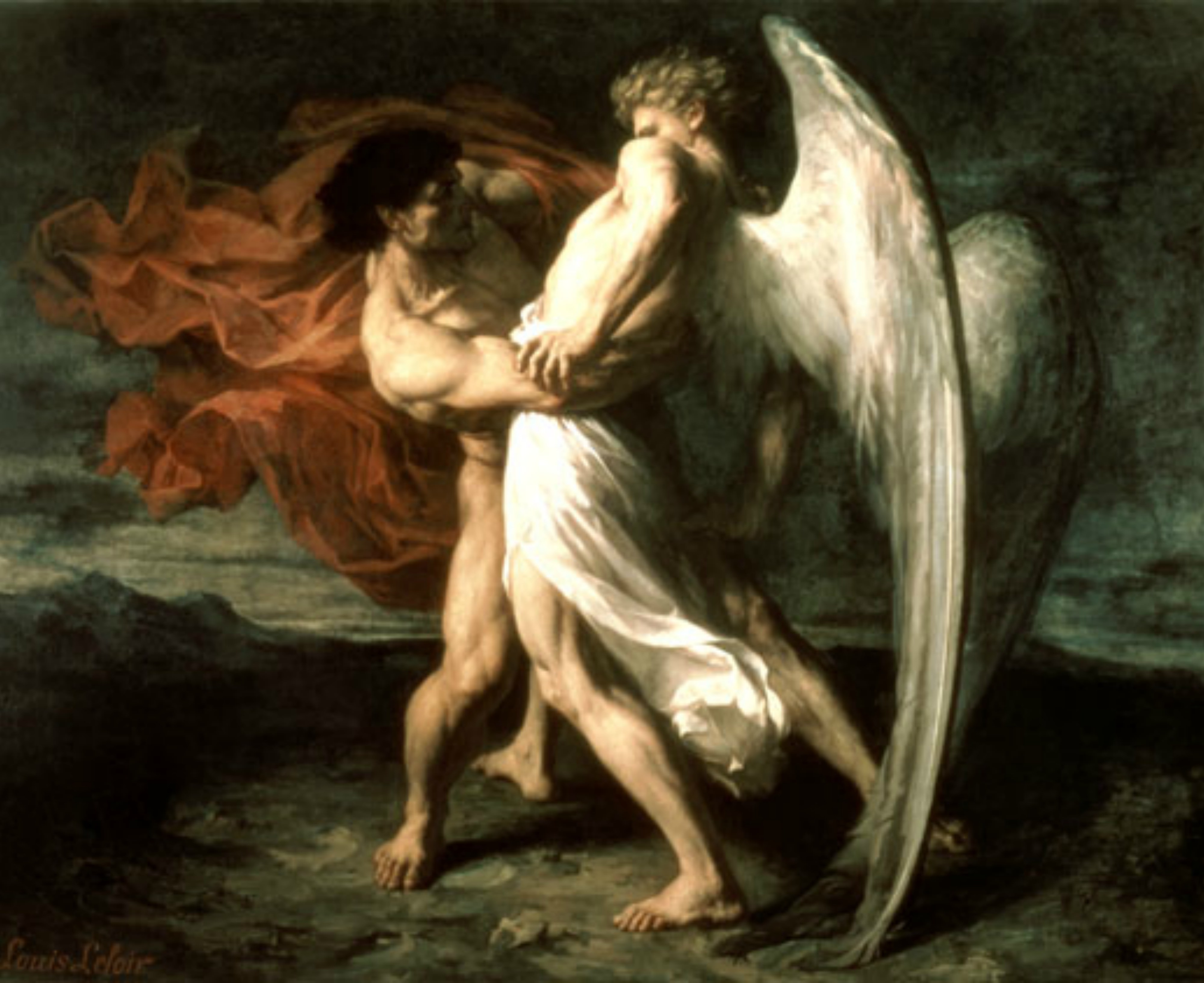
 
From Alexander Leloir (1865; Public Domain)
While a bit unrelated from the majority of the article, some have asked the question "Where does the idea that Jews do not eat the tendon come from?" According to Genesis 32:31-32, "The sun rose above him as he passed Peniel, and he was limping because of his hip. Therefore to this day the Israelites do not eat the tendon attached to the socket of the hip, because the socket of Jacob's hip was touched near the tendon." This is a curious statement due to the fact that there is nothing in the Mosaic law detailing this practice, nor is it echoed in later Scripture. First of all, it is relevant to understand the reason behind God's dislocating of Jacob's hip. The limp itself allowed Jacob to understand that the encounter was an actual, physical encounter with God and not a mere dream. Jacob had seen God in a dream once before years prior (Genesis 28), but now he was having an actual encounter with God in the flesh. Also, when Jacob surely described this experience to his family, he had physical evidence to provide credence to his claims in the form of a wrenched hip. When we consider the answer in a more general sense, we can understand that scars help remind us what we have learned or experienced. Scars remind us of where we have been, what we have done, past hurts and future promise. The scars also remind us of our need for our Creator, as well as the physical scars which he bore.

Next, we can determine the following: since the notion of not eating the tendon attached to the socket or hip is not found elsewhere in Scripture, it was surely a practice that was in use between the time of Jacob and the time of Moses. As a case can be made for the Mosaic authorship of Genesis under the Wiseman hypothesis, we can presume that this practice was at the very least in use during the time of Moses in the 1400s BC. After Moses, the practice appears to have fallen into disuse. It apparently came into being as a result of Jacob's encounter with God and either he or his sons began this tradition which was carried down for over two hundred years to Moses' time. Also, according to Jewish Rabbis, Jacob was given the limp as a punishment for wanting to flee God and for not relying on him. There are a few issues with this notion, but it is still worth noting in our examination of the topic.

Finally, "Why did the struggle last until daybreak, if God could simple defeat Jacob with a word? Why did God wrestle with Jacob in the first place?" Concerning the matter of why God wrestled with Jacob until daybreak, the answer is fascinatingly simplistic when viewed in light of the above answer. Just as God gave Jacob a physical reminder to last him all his days, God also fought with Jacob throughout the night and into the morning to show to Jacob that this encounter was not a mere dream. It also brought Jacob out of the darkness of the night and into the light of day, both literally and metaphorically. It was at this point when Jacob stopped fighting with God and clung to Him instead. The limp and the rising of the sun were physical realities that showed Jacob God's mercy and provided Jacob with the incentive to not fight with God but cling to Him. God could have ended the fight at any moment, but wanted it to last for Jacob's sake. This fight was not for God, but for Jacob. It was not Jacob who initiated the fight, but God. It was indeed his fight against God, but he did not at first realize that the fight was meant to help him. This brings us to the reason why God wrestled with Jacob. Aside from the reasons listed throughout the article, we may examine one other reason.

Chronologically, Jacob was between his struggle with Laban and his upcoming struggle with his brother Esau. Then God came in. This necessary encounter transpired to show Jacob that his struggle had been with God all along. Without friends or family or other support around, Jacob was left to pray at Jabbok. God was still impersonal to Jacob, but after this encounter, he stopped calling God the "God of my father" but "my God." He stopped resisting God and finally gave in to His will. God used the experience as a sort of object lesson for Jacob, and we would do well to learn from him. It was after this experience that God blessed Jacob, worth noting as it is the second blessing that Jacob has received on record. The first blessing was not rightly his, but his older brother Esau's. Jacob used the art of deception (or so Sun Tzu may view it as an art) to obtain this blessing from his father. Several years later, we come to Jacob's physical encounter with God, but this time the blessing is rightfully obtained. It is given to Jacob by God Himself, and a wondrous blessing it is indeed. To be fair, Jacob likely always had struggles the remainder of his days, as the loss of his son Joseph for many years demonstrates. But through those struggles, Jacob clung to the faith he had in God. 

Troy Hillman

Sources:
[1] Mack, Jay. "Jacob Wrestles With God." Jay Mack . N.p., 2012. Web. 5 May 2012.
[2] Goettsche, Rev. Bruce. "Wrestling With God." Union Church. Union Church, 4 Oct 1999. Web. 5 May 2012.
[3] Zacharias, Ravi K. Can Man Live Without God. 1st. Nashville, Tennessee: W Publishing Group, 1994. 144-145. Print.

Wednesday, February 22

Lions in Scripture

Lions: the Bible is replete with copious references to them. Lions are used often as a type of symbolism or imagery portraying an aspect of God's character or in prophecies concerning the Messiah. They also are not simply figuratively represented, but also appear in various accounts found in the Bible, such as the infamous account of Daniel and the lion's den as well as the attack of the lion on Samson, one of the Judges. On the evolutionary tree, lions came about through the same kind of animal group which tigers, cats, jaguar, leopards, and others developed from. Some male lions exceed 550 lbs in terms of weight, the second largest cat after the tiger.[1] The lion is classified as a threatened species, and can live around ten to fourteen years in the wild.

Lions were bred by Assyrian kings, and, according to tradition, Alexander the Great (356-323 BC) was with tame lions in India by wealthy landlords.[2] They were used in later Roman times by Roman emperors to participate in gladiator arenas. Pompey, Julius Caesar and others are known to have executed mass amounts of lions at various times.[3] Of Biblical interest, certain names include the "lion." Othniel's (the first of the judges) name can mean "lion of God" or "God is might." Ariel, both the symbolic name for Jerusalem (Isaiah 29:1-2, 7) and a man sent by Ezra (Ezra 8:16) also means "lion of God." Othni, one of the temple porters (temple gate keeper or musician), means "lion of Jehovah" (1st Chronicles 26:7). Arioch, a king of Ellasar (Genesis 14:1, 9) and Arioch, captain of King Nebuchadnezzar's guard (Daniel 2:14-15, 24-25), means "lion-like" or "venerable." Other examples are Ara (1st Chronicles 7:38), meaning "a lion" or "congregation," Arieh (2nd Kings 15:25) meaning "the lion," Laish (Joshua 11:5; Isaiah 10:30; 1st Samuel 25:44) also means "a lion," and Nergal (2nd Kings 17:30), one of the Assyrian and Babylonian gods - the god of war and hunting - meaning, "the great dog; that is, lion." The tribe of Judah was also symbolized by a lion (Genesis 49:9).

A male Asiatic lion (credit: Gangasudhan)
Perhaps one of the more infamous Biblical accounts of lions is the account of Daniel and the lion's den. Written by the prophet Daniel c.537 BC, Daniel 6 records said account. Darius had appointed 120 satraps (ساتراپ - a Persian governor of a province) to rule the kingdom, with three administrators appointed over them. One of these three was Daniel. In antiquity, Daniel was renown for his wisdom (Ezekiel 28:3), evidenced also in an early form of the scientific method utilized by Daniel to test his hypothesis concerning food and drink (Daniel 1:8-16). It seems that Darius had planned to appoint Daniel over all of the kingdom (6:3), which certainly did not please the administrators and the satraps. They attempted to find something to charge Daniel with, but could find nothing against him. A classic example of a hunger for power, the satraps and administrators went to Darius and persuaded him to issue an edict (a decree) and enforce the decree "that anyone who prays to any god or human being during the next thirty days [except the king], shall be thrown in the lions' den... in accordance with the law of the Medes and Persians, which cannot be repealed" (6:7-8). Daniel, however, upon learning of the decree, persisted in his daily prayers. Thrice each day, Daniel "went home to his upstairs room where the windows opened toward Jerusalem" (6:10).

When the administrators and satraps found Daniel praying and kneeling, they went to Darius and spoke with him, deceptively inquiring about the veracity of his decree concerning prayer and its effects. The king agrees that he did, and the men reveal that Daniel had broken this command. "When the king heard this, he was greatly distressed; he was determined to rescue Daniel and made every effort until sundown to save him" (6:14). It was, however, under Persian law, an unchangeable situation. The order was given, and Daniel was thrown into the lion's den. Some critics have challenged the notion that the "law of the Medes and Persians" could not be changed (cf. Esther 1:19, 8:8). However, Diodorus Siculus (17:30) reported that Darius III (336-330 BC) had an innocent men executed because he could not change what was decreed under royal authority. In the Biblical text, Darius (a different figure, possibly a governor of Babylon or Cyrus himself) could not sleep that evening, and would not eat or be entertained. At dawn, Darius went to the lions' den to determine the fate of his servant, Daniel, calling out to Daniel in anguish. "Then Daniel spoke with the king: 'May the king live forever. My God has sent His angel and shut the lions' mouths. They also haven't hurt me, for I was found innocent before Him. Also, I have not committed a crime against you my king'" (6:22).

As a result, Daniel is brought up out of the lions' den, uninjured. "The king then gave the command, and those men who had maliciously accused Daniel were brought and thrown into the lions' den, along with their wives and children. They had not reached the bottom of the den before the lions overpowered them and crushed all their bones" (6:24). The decree of Darius is one which we ought to adhere to, "For he is the living God and He endures forever; His kingdom will not be destroyed, His dominion will never end" (6:26). Daniel (Hebrew: דָּנִיּאֵל - Daniyyel) had faith in God, such faith that God "shut the mouths of lions" (Hebrews 11:33). Another instance of an encounter with lions in Scripture is that of a young King David. Displaying incredible faith, while conversing with King Saul about going up against the giant Goliath, David replied, "Your servant has been keeping his father's sheep. When a lion or bear came and carried off a sheep from the flock, I went after it, struck it and rescued the sheep from its mouth. When it turned on me, I seized it by its hair, struck it and killed it. Your servant has killed both the lion and the bear; this uncircumcised Philistine will be like one of them, because he has defied the armies of the living God. The LORD who rescued me from the paw of the lion and the paw of the bear will rescue me from the hand of this Philistine" (1st Samuel 17:34-37).

It is noteworthy that "The lion of Palestine was properly of the Asiatic variety, distinguished from the African variety, which is larger. Yet it not only attacked flocks in the presence of the shepherd, but also laid waste towns and villages (2 Kings 17:25-26) and devoured men (1 Kings 13:24-25). Shepherds sometimes, single-handed, encountered lions and slew them (1 Sam. 17:34-35; Amos 3:12).... The strength (Judg. 14:18), courage (2 Sam. 17:10), and ferocity (Gen. 49:9) of the lion were proverbial. Although not now found in Palestine, they must have been in ancient times very numerous there. They had their lairs in the forests (Jer. 5:6; 12:8; Amos 3:4), in the caves of the mountains (Song of Songs 4:8; Nah. 2:12), and in the canebrakes on the banks of the Jordan (Jer. 49:19; 50:44; Zech. 11:3)."[4] Evidently, there are also different words used in the Hebrew Bible to describe a lion. "1. Gor (i.e., a “suckling”), the lion's whelp (Gen. 49:9; Jer. 51:38, etc.). 2. Kephir (i.e., “shaggy”), the young lion (Judg. 14:5; Job 4:10; Ps. 91:13; 104:21), a term which is also used figuratively of cruel enemies (Ps. 34:10; 35:17; 58:6; Jer. 2:15). 3. 'Ari (i.e., the “puller” in pieces), denoting the lion in general, without reference to age or sex (Num. 23:24; 2 Sam. 17:10, etc.). 4. Shahal (the “roarer”), the mature lion (Job 4:10; Ps. 91:13; Prov. 26:13; Hos. 5:14). 5. Laish, so called from its strength and bravery (Job 4:11; Prov. 30:30; Isa. 30:6). The capital of northern Dan received its name from this word. 6. Labi, from a root meaning “to roar,” a grown lion or lioness (Gen. 49:9; Num. 23:24; 24:9; Ezek. 19:2; Nah. 2:11)."[5]

Another curious textual appearance of the lion is found in 1st Kings 13, probably written around 550 BC by Jeremiah. It details the account of a man of God who "came from Judah to Bethel" (13:1). After conducting certain business with the king, the man of God proceeded to return, but took a different way than the way which he had originally come. An old prophet living in Bethel heard what had occurred, and had his sons saddle a donkey for him. Upon finding the man, the old prophet lied to the man of God, telling him that "'An angel said to me by the word of the LORD: 'Bring him back with you to your house so that he may eat bread and water.'' (But he was lying to him.)" (13:18). As a result, the man followed the old prophet to his abode. The word of the LORD came to the old prophet, who relayed the message to the man of God concerning disobeying God's direct command not to eat bread or drink water or return the way he had come (13:17, 20-22). After the man of God had finished eating, his donkey was saddled, and "As he went on his way, a lion met him on the road and killed him, and his body was left lying on the road, with both the donkey and the lion standing beside it. Some people who passed by saw the body lying there, with the lion standing beside the body, and they went and reported it in the city where the old prophet lived" (13:24-25). When the old prophet heard of this, his sons saddled his donkey for him, and "Then he went out and found the body lying on the road, with the donkey and the lion standing beside it. The lion had neither eaten the body nor mauled the donkey" (13:28) so the prophet had the man of God's body buried and laid in his own tomb.

Harkening back to King David, even prior to David and the incident with the man of God, we have an earlier account - involving Samson the judge. Samson, a Danite, was renowned for his incredible strength and myriad of feats. Once, "Samson went down to Timnah together with his father and mother. As they approached the vineyards of Timnah, suddenly a young lion came roaring toward him. The Spirit of the LORD [God the Spirit] came on him in power so that he tore the lion apart with his bare hands as he might have torn a young goat. But he told neither his father nor his mother what he had done... Some time later, when he went back to the marry [a young Philistine woman], he turned aside to look at the lion's carcass, and in it he saw a swarm of bees and some honey. He scooped out the honey with his hands and ate as he went along. When he rejoined his parents, he gave them some, and they ate it. But he did not tell them that he had taken the honey from the lion's carcass" (Judges 14:5-6, 8-9). At the wedding feast, Samson gave his audience a riddle. After some persuasion, he explains the riddle to his wife, who "in turn explained the riddle to her people" (14:17). The riddle concerned the honey and the lion, and the guests gave the answer to the riddle, which seemingly did not make Samson very pleased (14:19-20).

Some have noted the similarities between this instance in the life of Samson and a particular feat accomplished by the Greek hero, Heracles (better known in his Roman form as Hercules). Hercules was the offspring of the god Zeus and a mortal woman named Alcmene, and foster son of Amphitryon, the Theban general. In Greek myth, Hera, the goddess wife (and sister) of Zeus, grew jealous of the sexual escapades of Zeus. Although he and Hera were essentially husband and wife, Zeus had a lust for women - typically whatever woman he saw, he had a child with in one form or another, sometimes disguising himself as someone (or something) else. As a result of this growing jealousy, culminating in a sense with driving Hercules mad, so that he killed his wife and children, Hera proceeded to send Hercules on a series of twelve labors (interestingly, one bears resemblance to the Garden of Eden, and may be part of the reason - aside from the Vulgate - why the misconception that the fruit in Eden was an apple may have arisen from). Not all writers have the same order of the twelve labors, but Apollodorus (2.5.1-2.5.12), a Greek scholar and grammarian, gives the first labor as the killing of the Nemean lion.

Tribe of Judah emblem (Public domain)
The Nemean lion (Λέων της Νεμέας - Léōn tēs Neméas) was a monster in Greek myth that resided in Nemea, which is today part of the prefecture of Korinthia (or Corinthia). In the myth, mortals could not would the beast, as its golden fur was immune to their attacks. According to Apollodorus (Library 2.5.1), the Nemean lion was the offspring of Typhon (who is the "father of monsters" in Greek myths, such as the Hydra and Cerberus), but according to Hesiod, a Greek oral prophet, the lion was considered the offspring of Orthrus (Theogony 327). It has been posited (especially in apologetics) that Hercules/Heracles is based off of the historical figure seen in the biblical book of Judges - Samson, son of Manoah. One of Hercules' labors was to defeat a lion, and Samson also defeated a lion with his strength. However, lions are not common in Greece. The inhuman strength of Heracles is also reflected in the historical Samson. Hercules may have been a legend based off of Samson (a legend is generally a story rooted in some sort of historical basis). Either way, the account of Samson is a very fascinating one. Yet another reference to lions is found in the infamous passages about the lion in the future kingdom of God.

Isaiah 11:6-7 states that "The wolf will live with the lamb, the leopard will lie down with the goat, the calf and the lion and the yearling together; and a little child will lead them. The cow will feed with the bear, their young will lie down together, and the lion will eat straw like the ox." The other relevant passage often cited is Isaiah 65:25, "'The wolf and the lamb will feed together, and the lion will eat straw like the ox, but dust will be the serpent's food. They will neither harm nor destroy on all my holy mountain,' says the LORD." These passages seem to be, taken in context as well as with other supporting scriptural references, referring to a kind of Edenic paradise where creatures such as lions, well known as carnivores, revert back to the Edenic (pre-Fall) nature of eating plants (cf. Genesis 1:29-30). Many biblical scholars believe that this is intended to occur during the future kingdom of God (Zechariah 14; Revelation 20, etc.). Lastly, the well-known use of the title of Jesus, the "Lion of Judah." As mentioned earlier in the article, when Jacob was blessing his son, Judah, he referred to him as a "young lion" (Genesis 49:9; Gur Aryeh גּוּר אַרְיֵה יְהוּדָה), where the Lion later comes to represent Christ.

In John's letter from Patmos (written c.AD 95), we read, "Then one of the elders said to me, 'Do not weep! See, the Lion of the tribe o Judah, the Root of David, has triumphed. He is able to open the scroll and its seven seals" (Revelation 5:5). In the fantasy series, The Chronicles of Narnia, written by author and apologist C.S. Lewis (1898-1963), a lion named Aslan (the King of Beasts and son of the Emperor Over the Sea) represents Jesus Christ as he would be in a fantasy world. Various traits of Jesus can clearly be seen in Aslan throughout the series. The name itself, Aslan, is the Turkish word for "lion." Therefore, while this is certainly not an exhaustive investigation or in-depth examination of the use of lions in the proverbial and historical sense in Scripture, a general overview (as intended) allows for further research on the part of the reader, if wished. It is fascinating to see the way in which God's Word portrays different people, places and things through the use of symbolism in imagery, particularly when it comes to lions in Scripture.

Troy Hillman

Sources:
[1] Nowak, Ronald M. Walker's Mammals of the World. Baltimore: Johns Hopkins University Press, 1999.
[2] Smith, Vincent Arthur. The Early History of India. Oxford: Clarendon Press, 1924. 97. Print.
[3] Wiedemann, Thomas. Emperors and Gladiators. Routledge, 1995. 60. Print.
[4] "Lions." WebBible Encyclopedia. Christian Answers Network, n.d. Web. 10 Feb 2012.
[5] Ibid.

Thursday, February 9

The Leviathan


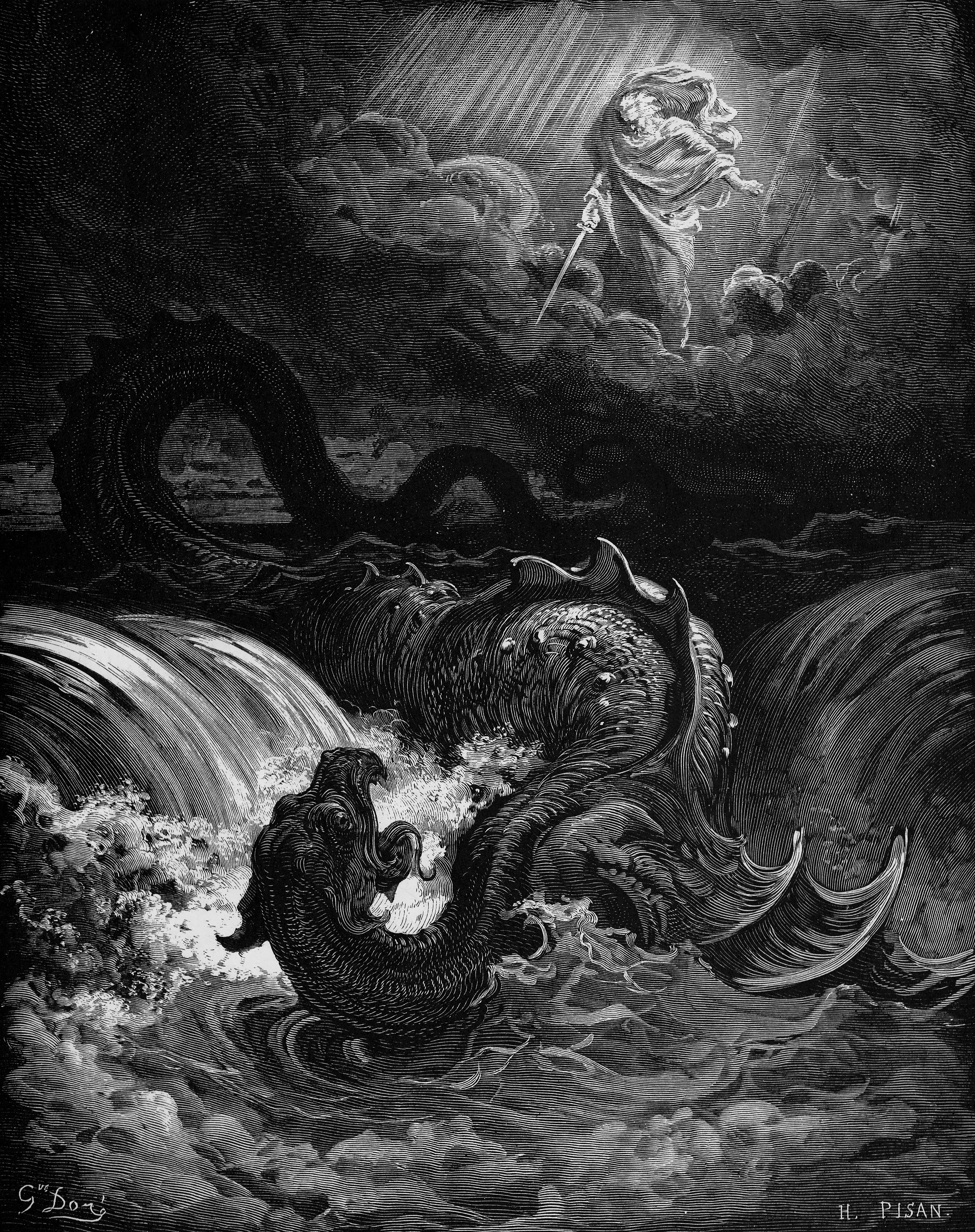
The Leviathan: real creature or mythical invention? Alligator, crocodile, or perhaps - as YEC's claim - a dinosaur? What was the Leviathan? On several occasions in the Hebrew Bible, a creature given the name Leviathan appears. In ancient Middle Eastern mythologies, however, a similar creature appears. This has led to the claim that the biblical Leviathan is based off of the Canaanite myth concerning a similar creature, a Babylonian myth, an Egyptian myth, or others. But is this truly the case? If the Leviathan was an actual creature, what was it? Could it really breath fire, as the text of the book of Job seems to imply? If so, what implications does this view entail? The Leviathan is often used by critics to contend that the Hebrew Bible was based off of earlier mythologies. It it our contention, however, that the reality is converse: the mythologies were based off of reality, but became a distorted version of that reality, whereas the biblical text accurately preserves such accounts. The Leviathan is one of the most fascinating creatures mentioned in the Bible, and evidently the topic is a valid one (Photo credit: Gustave Dore, 1885, "Destruction of the Leviathan" public domain usage; from ДиБгд, public domain usage).

Chronologically, the first mention of the Leviathan is found in the book of Job. Job was likely written by Mfoses during his time in Midian in-between his escape from Egypt and before his return to bring the Israelites out of Egypt (c.1485-1445 BC). While bemoaning his current state, Job makes a passing reference to the create, "May those who curse days curse that day, those who are ready to rouse Leviathan" (Job 3:8). A fuller (and the most detailed) description of the Leviathan is found toward the end of the book in Job 41, in which God is speaking to Job. The Leviathan is again mentioned in Psalm 74 (a maskil of Asaph, who lived during the reign of King David, which lasted from c.1010-970 BC) and in Psalm 104 (probably a Psalm of King David) and lastly in Isaiah 27, written around 730-700 BC. Some have likened the Leviathan unto Rahab, a figurative name in the Hebrew Bible used of Egypt and the sea. Of particular interest is Psalm 89:10, which says, "You crushed Rahab like one of the slain; with your strong arm you scattered your enemies" (cf. Isaiah 27).

It is relevant to the topic to display some of the aforementioned passages (the lengthy description found in Job 41 will be examined later in the article), and the other relevant passages are as follows:
  • "You divided the sea with Your strength; You smashed the heads of the sea monsters in the waters; You crushed the heads of Leviathan; You fed him to the creatures of the desert" (Psalm 74:13-14; HSCB).
  • "Here is the sea, vast and wide, teeming with creatures beyond number - living things both large and small. There the ships move about, and Leviathan, which you formed to play there" (Psalm 104:26).
  • "On that day the LORD with His harsh, great, and strong sword, will bring judgment on Leviathan, the fleeing serpent - Leviathan, the twisting serpent. He will slay the monster that is in the sea" (Isaiah 27:1).
From Gustave Dore (1865)
Thus far, we are able to establish: 1) the Leviathan is a "sea monster," or a "monster that is in the sea," it is also a "fleeing serpent," or "twisting serpent," and where "the ships move about" the Leviathan was found, which was "formed to play there." In other words, the above three texts (as well as the Job 3:8 text) appears to be describing some kind of sea serpent, from the surface. The more detailed description in Job 41 will further elucidate the identity of the creature, or at least give us clues to its nature and identity. However, before the description is explored, it is important to address common concerns or objections toward the Bible's inclusion of the Leviathan. For example, the Isaiah 27 text appears to be indicating that God will fight with the Leviathan "on that day," which was a general formula used to refer to end times events. One common objection involves the notion that the Hebrew Bible borrowed (or copied) the concept of a god and serpent fighting at the end of the world, or a god and serpent fighting in general.

In Greek mythology, the Olympian god Apollo (the son of Zeus and Leto) - the god of the sun and light as well as truth and prophecy, music and poetry, and other functions - slew the earth-dragon (or serpent), Python. There are various versions and interpretations of this, such as an older myth which includes two dragon (the female of which is called Delphyne), and in the Homeric Hymn to Apollo (composed c.522 BC), some sections mention Apollo fighting a female dragon, the deadly Drakaina.[1-2] In later Norse mythology, the thunder god, Thor, is depicted is fighting the Jörmungandr at the end of time (better known as the Jormungand or the Midgard Serpent). According to the Prose Edda (written around AD 1220), the ruler of Asgard, Odin, took the three children of Loki, and tossed one of them (the Midgard Serpent) into the ocean that surrounds Midgard (an old Germanic name for our world).[3] This serpent continued to grow, and eventually was able to surround the earth and grasp its own tail. In the mythology, when the serpent lets go, the world is supposed to end. Thor encounters this Serpent on more than one occasion, but at Ragnarök (a series of events akin to the end times), the Serpent will come out of the ocean, and is said to poison the sky.[4] After a vicious fight with the creature, Thor will finally kill Jörmungandr and walk nine paces forward before falling - Thor will have been poisoned by the serpent's venom.[5]

Another example of a god and a serpent caught in battle is found in Vedic religion. There is a serpent (or dragon) called the Vritra which represented drought and was an enemy of Indra. Indra (or Sakra), in this mythology, is the king of the gods (or Devas) and Lord of Heaven. The Vritra is an Asura, which is a group of power hungry deities, generally thought to be sinful and materialistic in nature. In the Vedas (Hindu scriptures), Vritra was also known as the Ahi. In the mythology, the Vritra appears as a dragon/serpent who blocks the course of mighty rivers, and as a result, is eventually slain by Indra. Yet another example is found in the battle between Marduk and Tiamat. Marduk was the sun god of Babylon, and Tiamat was a chaos monster and goddess of the ocean. Some sources identify her as a serpent or dragon.[6]

Some have noted that the "Leviathan" appears in texts from Ras Shamra (ancient Ugarit; in Canaanite mythology). In the texts, the pagan god Baal fights - and wins the fight - against a sea monster, Lotan, and Yam (a sea god). Baal wins the fight with weapons which he had pronounced an incantation over.[7] Others have entertained a history and background in mythological concepts of a solar and lunar eclipse caused by a great dragon. In central India, for example, there is a myth about a great dragon that swallowed the sun. In the event that the dragon tries to swallow the sun, "a goat was beheaded in sacrifice to Kali, the Black Goddess, the cause and controller of earthquakes, storms, and other evil things, and the archenemy of demons. Prayers were offered to her that she might frighten away the Dragon."[8] The Bible may use the language of Canaanite myths (Baal vs Lotan and Yam) in a way to affirm the rule of our Creator, but that does not indicate that the Bible is borrowing or copying from pagan mythologies. Similarity does not prove that something was copied. A common analogy in this case has been paintings: simply because two paintings look similar does not prove that one borrowed (or copied) from the other. The Canaanite creature was feared, and was portrayed as a seven-headed dragon.[9] In pagan terms, it was feared, but in biblical terms, God formed the Leviathan to play in the sea (Psalm 104:26).

In later Jewish literature, the Leviathan was often portrayed as a dragon who serves over the Sources of the Deep. Tradition taught that God created a male and female Leviathan, but so that they did nit reproduce and destroy the world, God destroyed the female, and is reserving her meat for a banquet at the arrival of the Messiah. This tradition was also found in the Rashi, a medieval French Rabbi, in a commentary on Genesis. The gigantic size of the Leviathan was detailed by R. Johanan, from whom we have much Jewish tradition (aggadot), "Once we went in a ship and saw a fish which put his head out of the water. He had horns upon which was written: 'I am one of the meanest creatures that inhabit the sea. I am three hundred miles in length, and enter this day into the jaws of the Leviathan'" (B. B. l.c.). In a legend called Pirke de-Rabbi Eliezer (recorded in a Midrash, a Jewish interpretation), the text conveys that the fish which swallowed the prophet Jonah (Jonah 1:17-2:10) barely avoided being eaten by the Leviathan, which, according to the legend, eats one whale every day. Not surprisingly, the Leviathan also appears in Apocryphal literature. 

According to 2nd Esdras 6:49-52 (written AD 90-96 or 218), on the fifth day of creation, God created the Leviathan and the Behemoth, setting "apart two creatures: one you call Behemoth and the other Leviathan. You put them in separate places, for the seventh part where the water was collected was not big enough to hold them both. A part of the land which was made dry on the third day you gave to Behemoth as his territory, a country of a thousand hills. To Leviathan you gave the seventh part, the water. You have kept them to be food for whom you will and when you will." Also, in the Syriac Apocalypse of Baruch 29:4, "the time is predicted when the behemoth will come forth from his seclusion on land and the leviathan out of the sea, and the two gigantic monsters, created on the fifth day, will serve as food for the elect who will survive in the days of the Messiah."[10] The pseudipigraphal work of 1st Enoch, written between the 3rd-1st centuries BC, 1st Enoch 60:7-9 records, "And on that day two monsters were separated from one another, a female monster named Leviathan, to dwell in the abyss of the ocean over the fountains of the waters; And the male is named Behemoth... And I asked the other angel to show me the might of those monsters, how they were separated on one day and thrown, the one into the abyss of the sea, and the other to the earth's desert." Gnostic literature also has a bit of a different interpretation of the Leviathan.

Having established a bit of a general understanding concerning how different views have been formed concerning the creature over the ages, it is now pertinent to delve into the possible identity of the creature itself. There are those who would argue that the Leviathan is nothing more than a mythological or figurative construct, and there are those who would argue otherwise. Footnotes in different versions of the Bible identify the creature as a "crocodile or alligator," although some identify the creature as a whale or shark. In Egypt, the crocodile (particularly along the Nile river) was a hunted animal. In ancient Egypt, the crocodile is thought to have, in some contexts, symbolized royal power, and some hold the notion that the Leviathan would symbolize a force that only God could overcome. Ancient Hebrews likely never encountered alligators, and it is the view of many evangelical and secular scholars that the Leviathan was influenced by the Nile crocodile. But is this a good interpretation of the Biblical Leviathan? Though a controversial view, the often maligned Young Earth Creationists hold that the Leviathan was likely a kind of dinosaur. While we may not fully agree with this perspective, it is one worth exploring.

Dr. Henry Morris of the Institute for Creation Research explains in one of his works, concerning Job 41, "The witness of the great beast behemoth is brought into still sharper focus when God begins to speak of leviathan. As the behemoth was the greatest terrestrial animal, the leviathan was the greatest aquatic animal. Like the behemoth, it seems to be extinct, although reports continue to persist of great sea serpents and plesiosaur-like animals in oceans and deep lakes around the world... Note a few characteristics of leviathan. 'Canst thou fill his skin with barbed irons? or his head with fish spears?... Behold, the hope of him is in vain: shall not one be cast down even at the sight of him? None is so fierce that dare stir him up:... The sword of him that layeth at him cannot hold' (Job 41:7, 9, 10, 26). These and other verses indicate that the leviathan was impregnable to human efforts to capture or slay him. Yet zoos are full or crocodiles, and crocodiles have been hunted so successfully that they are often considered an endangered species. The same applies to whales. And what about the following description? 'By his neesings a light doth shine, and his eyes are like the eyelids of the morning. Out of his mouth go burning lamps, and sparks of fire leap out. Out of his nostrils goeth smoke, as out of a seething pot or caldron. His breath kindleth coals, and a flame goeth out of his mouth' (Job 41:18-21)."[11]

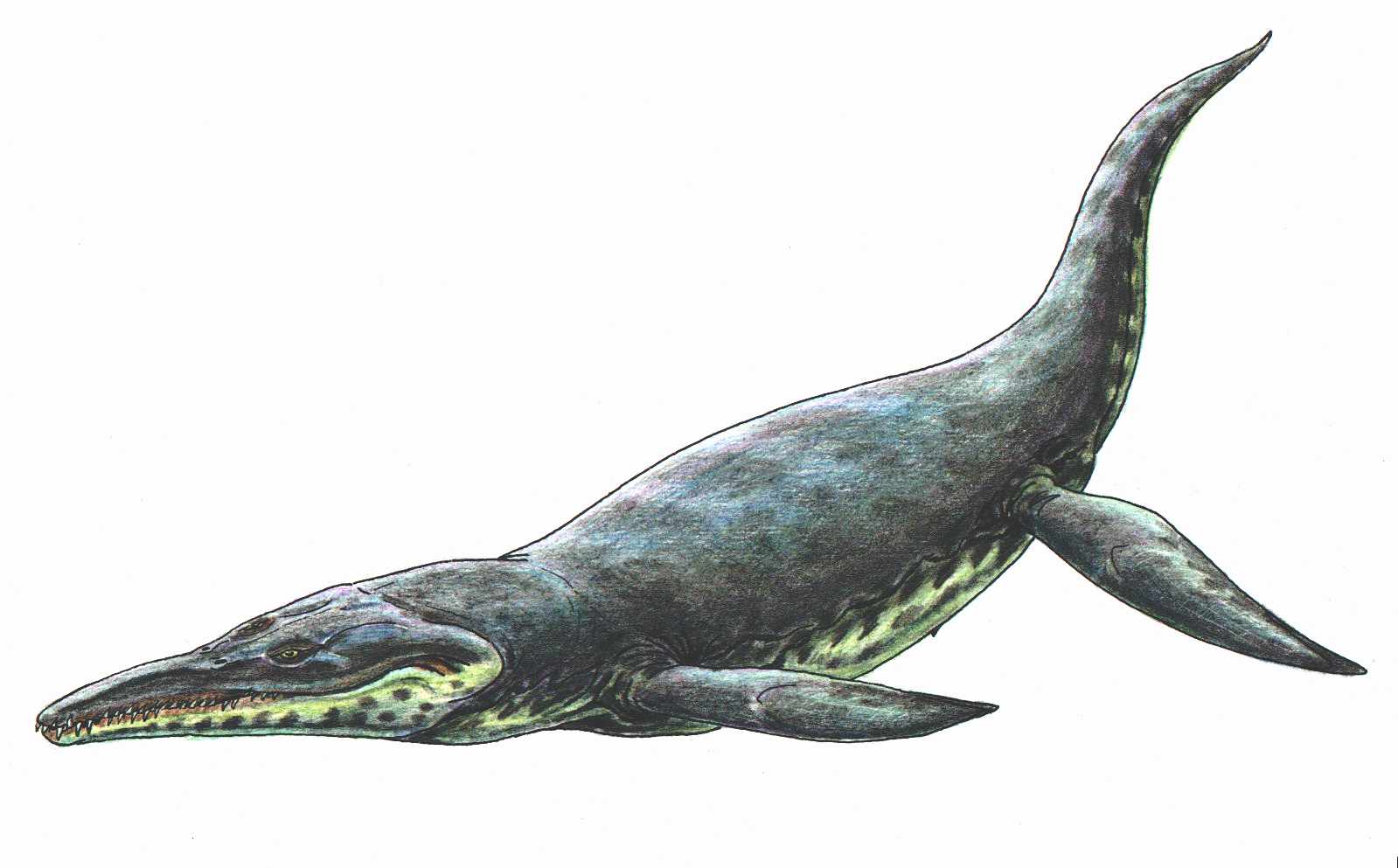
Job's description also notes that the creature "maketh the deep to boil like a pot" (Job 41:31). Evidently, these sea creatures were still living in the time of King David (Psalm 104), probably in the Mediterranean Sea. The creature, if indeed it was a dinosaur (although it is noted that many will disagree with this interpretation), was likely a Kronosaurus or something similar to it. It was not actually a true dinosaur, but was actually a reptile-like sea creature with large, sharp teeth. For centuries, reports have come from people in all walks of life concerning sea serpents or lake creatures similar in description to the Leviathan. Perhaps the most famous of these is the Loch Ness Monster, thought by some, if it exists, to be a kind of plesiosaur. In the Life of St. Columba by Adomnán of Iona (c.AD 627-704, written in the 7th century, a story is detailed concerning St. Columba in the 6th century, when he approached Loch Ness, and an incident allegedly occurred with the creature, in which the Saint commanded the creature to retreat from a man. When a lakeside road was built in the 1930s, a series of consecutive photos and reports flooded in, and to this day continue in some degree, though the debate surrounding the creature rages on.

Some believe the Leviathan was a Kronosaurus
There are many other reports of living dinosaurs, sea serpents or lake creatures. Perhaps one of the more relevant reports to the discussion concerning the Leviathan comes from Georg von Forstner, a captain in World War II who commanded a German submarine. The report came during the war. According to Forstner, "On July 30, 1915, our U28 torpedoed the British steamer Iberian carrying a rich cargo in the North Atlantic. The steamer sank quickly, the bow sticking almost vertically into the air. When it had gone for about twenty-five seconds there was a violent explosion. A little later pieces of wreckage, and among them a gigantic sea animal (writhing and struggling wildly), was shot out of the water to a height of 60 to 100-feet. At that moment I had with me in the conning tower my officers of the watch, the chief engineer, the navigator, and the helmsman. Simultaneously we all drew one another’s attention to this wonder of the seas…we were unable to identify it. We did not have time to take a photograph, for the animal sank out of sight after ten or fifteen seconds. It was about 60-feet long, was like a crocodile in shape and had four limbs with powerful webbed feet and a long tail tapering to a point."[12]

Critics of such reports have attempted (sometimes aggressively) to refute them. The claim of the critics usually go something like, "It is impossible for the creature to have been a Kronosaurus because science has proven that the dinosaur died off 65 million years ago, and is now extinct." While this may be true, there are a myriad of examples where we have found creatures from pre-historic times still with us. Another common objection is that the dinosaur theory does not take Psalm 74 into account. The claim is essentially as follows, "Psalm 74:13-14 describes the seven heads of the Leviathan. Therefore, the dinosaur theory could not be true, since the story is more reminiscent of the hydra or other mythical creatures." The Leviathan was portrayed in Canaanite mythology as being a seven-headed dragon, although the Biblical text does not mention seven heads, so the claim is partially falsified. Second, while it is true that the text mentions the "heads of Leviathan," that does not necessitate that the text is referring to only one Leviathan.

There are many other common objections, and there are many good, in-depth replies to said objections. It is not the purpose of this article to answer these, but to provide a background on the Leviathan and offer possible identifications of the creature. On a different, more eschatological note, what of the notion that God is going to defeat the creature at the end of time? For this answer, we turn to the New Testament. Revelation 12 describes an enigmatic end-time battle between the archangel Michael and his angels against the fallen Satan and his angels. Of interest is the description of the form in which Satan chooses to appear in this battle. Elsewhere, Satan appears, disguised as the serpent in Eden (Genesis 3; Revelation 12:9, 20:2), sometimes appearing in his likely pre-fall state, as an angel of light (2nd Corinthians 11:14), and may be able to disguise himself as a human, given the heavenly angels ability to do so (Hebrews 13:2). In Revelation 12, however, Satan appears in a very different form - as "an enormous red dragon with seven heads and ten horns and seven crowns on its heads" (12:3). Perhaps one of the more striking passages follows, which says, "And there was war in heaven. Michael and his angels fought against the dragon, and the dragon and his angels fought back. But he was not strong enough, and they lost their place in heaven. The great dragon was hurled down - that ancient serpent called the devil, or Satan, who leads the whole world astray. He was hurled to the earth, and his angels with him" (12:7-9). To note, here, Satan appears as a dragon - with seven heads. 

This, then, is the missing piece of the puzzle. Given the context of the book of Job and the cosmic drama between God and Satan, "In ending His discourse, God called leviathan 'a king over all the children of pride' (Job 41:34), so the animal is also symbolic of Satan, whose challenge to God instigated Job’s strange trials. He is 'the great dragon . . . that old serpent, called the Devil, and Satan, which deceiveth the whole world' (Revelation 12:9). Perhaps, therefore, the mysterious and notorious extinction of the dinosaurs is a secular prophecy of the coming Day of Judgment, when God 'shall punish leviathan' (Isaiah 27:1), and the 'devil that deceived them' will be 'cast into the lake of fire . . . and shall be tormented day and night for ever and ever' (Revelation 20:10)."[13] In Job 41, we may infer that God was weaving hints in and out of His discourse concerning the Leviathan toward Satan, essentially God was saying to him, "Job did not deny Me and curse Me, therefore, you serpent, you have lost." With Revelation 12 in mind, texts such as Isaiah 27, which speak of God fighting or defeating the great serpent/dragon, the passage is further elucidated. The Leviathan was used by God in His discourse to show Job the first in rank of His aquatic creatures, something which Job had evidently been aware of prior to this (Job 3:8). While critics of the Biblical text may contend that the Leviathan is a mythological construction, regardless, it should on a personal level remind us that God, who noted that He had control of the creature, also has control of everything else. Even though our problems may become larger than life, so to speak, God is larger than those problems. 

Troy Hillman

Sources
[1] Burket, Walter. "Kynaithos, Polycrates and the Homeric Hymn to Apollo" from Arktouros: Hellenic studies presented to B. M. W. Knox. ed. G. W. Bowersock, W. Burkert, M. C. J. Putnam. Berlin: De Gruyter, 1979. 53-62, Print.
[2] Kerenyi, Karl. The Gods of the Greeks. Thames and Hudson, 1951. 136. Print.
[3] Sturluson, Snorri. Gylfaginning ch. xxxiv. 2008. 37. Print.
[4] Ibid, 61-62.
[5] Ibid.
[6] Jacobsen, Thorkild. "The Battle between Marduk and Tiamat". Journal of the American Oriental Society 88 (1). 1968.104–108. 
[7] Sean McDowell and John Stonestreet, et al.. Apologetics Study Bible for Students. 1st ed. Nashville, Tennessee: Holman Bible Publishers, 2009. 513. Print.
[8] Christian, James L. Philosophy: An Introduction To The Art of Wondering. 3rd ed. New York: Holt, Rinehart and Winston, 1981. 3. Print.
[9] Ibid, [7]. 609.
[10] "LEVIATHAN AND BEHEMOTH." Jewish Encyclopedia. N.p., 2011. Web. 8 Feb 2012.
[11] Morris, Ph.D., Henry M. The Remarkable Record of Job. 3rd ed. Grand Rapids, Michigan: Master Books, 2004. 117-125. Print.
[12] Taylor, Paul S.. "Sightings." The Great Dinosaur Mystery. Eden Communications, n.d. Web. 9 Feb 2012.
[13] Morris, Ph.D., Henry M.. "Leviathan." Institute for Creation Research. N.p., n.d. Web. 3 Feb 2012.